
 0086-20-3156-0779
0086-20-3156-0779
0086-20-3156-0779


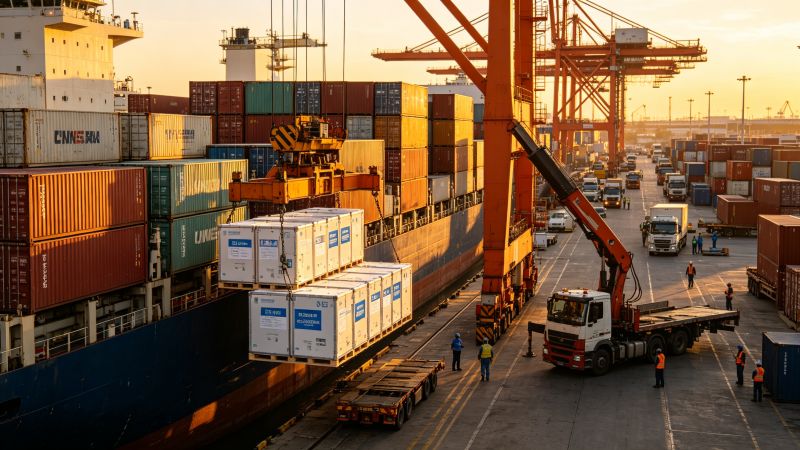
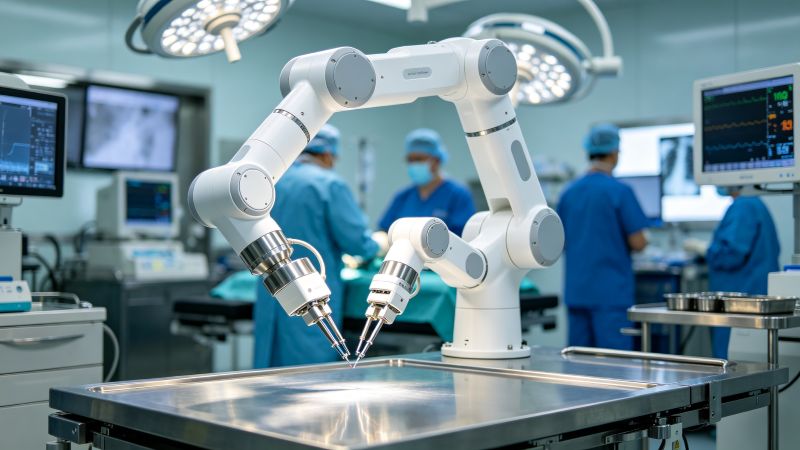
The headline number landed in early September: China exported $27.1 billion worth of medical devices in the first half of 2026, up 12.4% year over year, according to the China Chamber of Commerce for Import and Export of Medicines and Health Products. The composition matters more than the total. Hospital diagnostic and treatment equipment exports rose 14.4% to $12.85 billion; surgical robot exports rose 368.1%; PET and SPECT imaging equipment rose 175.2%. The number of export markets expanded from 23 to 49. At the company level, Mindray's international revenue crossed half of group sales for the first time, reaching 9.47 billion yuan, while United Imaging's overseas revenue jumped 54.46%, with Asia-Pacific revenue doubling and Europe up nearly 50%. For two decades the story of China's medtech industry was low-cost consumables. In 2026 it became, measurably, a high-value equipment story. The problem is that the organizations behind these products were built for a domestic market, and the talent required to run a global one barely exists.
The market mix has shifted in ways that raise the talent bar. The European Union absorbed $5.57 billion of devices, up 18.2% — faster than overall growth — with ultrasound, dental X-ray and MRI exports to Europe all up more than 20%, and pacemaker and dialysis equipment exports doubling. The United States, still the largest single market at $5.37 billion, grew only 4%, its share of the total shrinking by 1.64 percentage points. Russia leapt from seventh to fourth place with 26.8% growth. ASEAN added $2.93 billion. Every one of these markets demands something different: CE marking under the EU MDR, FDA 510(k) and PMA pathways, national registration schemes across Southeast Asia, and increasingly in-country service networks, because a multi-million-dollar imaging system is sold with training, clinical support, spare parts and response-time commitments attached. Neusoft Medical now promises 24-hour emergency repair in Africa, down from seven days, by stocking local parts warehouses with resident engineers. That is an operations promise, and operations promises require people on the ground.
The bottleneck roles cluster into three categories. A senior consultant at Henderson Executive Search says the hardest searches start with regulatory affairs leadership: professionals who can write technical documentation and clinical evaluation reports in English, negotiate directly with notified bodies and the FDA, and design registration strategies across dozens of jurisdictions at once. "The candidate who can run an MDR technical file and still explain a 510(k) submission to the board is rare," the consultant says. Industry talent reports put compensation for international sales managers covering Latin America, the Middle East and Europe at 300,000 to 500,000 yuan a year — a clear premium over domestic equivalents — and note that roughly 70% of openings cluster in the coastal manufacturing regions, where several employers end up bidding for the same few candidates.
The second and third categories compound the problem. International sales leadership now demands fluency in registration rules, channel structures and local clinical preferences; the old playbook of exporting through distributors with a product catalog no longer clears procurement committees in Europe. Local service engineering is scarcer still: United Imaging maintains regional service centers in 12 countries, and every one of them needs application specialists and field engineers who combine biomedical training with local language and regulatory familiarity. Companies that once staffed an overseas market with two or three country managers now need full country organizations — sales, regulatory, quality, service — and the country manager who can build one from scratch is among the rarest profiles in Chinese medtech. Henderson Executive Search has watched senior vacancies in this layer stay open for six to nine months, often because the search only started after the market-entry decision had already been made.
The financials explain why boards are paying attention. Thirty-odd STAR Market-listed device makers grew combined revenue 27% in the first half, with nearly a third of them deriving more than 30% of revenue from overseas. iRay Technology's overseas revenue more than doubled, up 103.49%, to 44.59% of sales. Micro-Tech now books 63% of revenue outside China. Eight Chinese companies made this year's global medtech top 100. When overseas moves from a sales line to half the P&L, the executive bench question stops being an HR detail and becomes a board agenda item.

Here's the thing, though. The pipeline is being built. Chinese engineering universities are producing biomedical graduates at scale, consultancies are training registration professionals, and localization — hiring country teams in-market rather than dispatching expatriates — is shortening time-to-competence. Some of the constraint is self-inflicted: companies routinely treat hiring as the last step of market entry, after distributors are signed and customers are already waiting, which turns a twelve-month problem into a crisis. But the near term does not wait for the pipeline. Registration cycles run 12 to 24 months per market, and a regulatory lead hired today needs roughly a year to become fully productive. The math is unforgiving: a device company expanding into five new markets needs five sets of filings, dozens of service engineers and at least one regional leadership bench, all before the revenue those markets are projected to contribute actually lands.
The firms that staff first will win. Henderson Executive Search advises clients to draw the organization chart before the market-entry decision, decide deliberately which roles are hired locally and which are seconded from headquarters, and keep a warm bench of regulatory and service talent in Düsseldorf, Singapore and São Paulo before the first container ships. The product story is already written: Chinese devices now compete on technology, not just price. Whether the industry converts a record export run into durable global businesses depends on a quieter number — how fast the regulatory and operational bench can grow to match the machines. The machines are ready. The people are the constraint.
Q: Which medical device roles are hardest to fill as exports go up-market?
A: Regulatory affairs leads who can own EU MDR technical files and FDA submissions in English, international sales managers who understand registration rules and channel structures, and field service or application engineers with biomedical training and local language skills. Senior vacancies in this layer often stay open six to nine months.
Q: Why is the EU market raising the talent bar?
A: EU-bound exports grew 18.2% to $5.57 billion, with pacemaker and dialysis equipment exports doubling. Selling high-value equipment into Europe means CE marking under MDR, notified-body engagement, clinical evaluation reports and in-country service commitments — all of which require specialized staff rather than distributor-driven export models.
Q: What does international talent cost in Chinese medtech?
A: Industry talent reports show international sales managers covering Latin America, the Middle East and Europe priced at 300,000 to 500,000 yuan a year, above domestic equivalents, with roughly 70% of openings concentrated in coastal manufacturing regions where several employers compete for the same candidates.
Q: When should a company start hiring for a new overseas market?
A: Before the market-entry decision, not after. Registration cycles run 12 to 24 months and a regulatory lead needs about a year to become fully productive. Companies that wait until distributors are signed routinely see senior vacancies stay open six to nine months, delaying the very revenue the expansion was approved against.






 America Is Short 157,000 Chip Workers. The Talent War Just Moved to Asia