
 0086-20-3156-0779
0086-20-3156-0779
0086-20-3156-0779


James Chen, 41, was a senior engineer at Taiwan's top chip maker. Like hundreds of thousands of tech workers in Taiwan, he used to think that he would spend his entire career in the Hsinchu Science and Technology Park, which is One of the world's most important semiconductor manufacturing centers with more than 400 companies.
But now, this is Chen's sixth year working in a mainland company in Guangdong. Chen said he has no plans to return to Taiwan. Industry insiders also pointed out that for many science and technology workers who are from Taiwan but now working in the mainland China, "the money earned in the mainland in three years is equivalent to the money earned in Taiwan in eight years."
Chen is currently responsible for forming his own team for the company. He admitted that it was not difficult to make the decision of not returning to Taiwan. "On the mainland, there is more room for development and much more can be expected. But in Taiwan, the market has been occupied by large companies, so the development platform may be relatively small."
At present, there is no official data showing how many Taiwanese people work in mainland technology companies, but a widely cited statistic indicates that about 9% of the Taiwanese population, including businessmen, corporate managers, students and their families Living on the mainland is about 2 million people.
Although for Chinese science and technology workers in Taiwan, "moving into mainland" is not a new phenomenon. But industry observers point out that this trend has become more pronounced in the past few years.
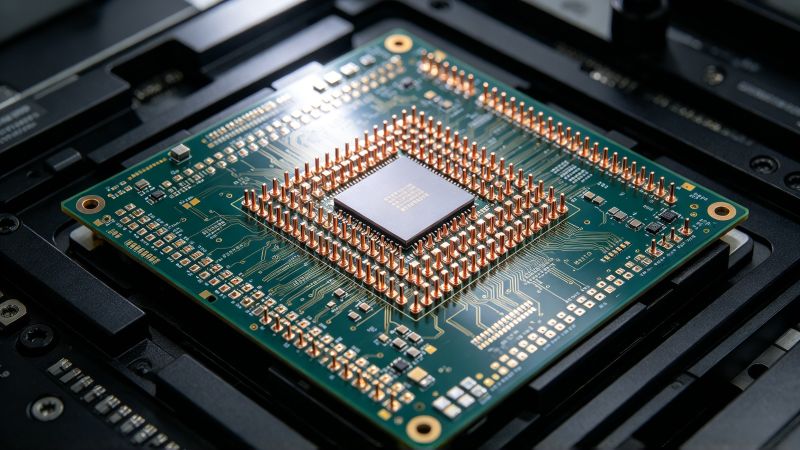
In order to reduce dependence on foreign companies, one of the mainland's initiatives is to step up its efforts to attract technical talents like Chen, especially in the semiconductor field-semiconductors provide power for smart phones, military satellites and other products.
It is reported that mainland's progress in chip production is largely the result of cooperation with Chinese Taiwanese companies, which is one of the leaders in the industry.
In the past few decades, major integrated circuit design companies and chip manufacturers in Taiwan, China, such as MediaTek, VIA Technologies, Realtek, and TSMC, have set up factories in mainland China. Or joint venture, and dispatched experienced engineers and managers to it.
Taiwanese industry observers have stated that "talent is the key to the development of the chip industry, and mainland China faces shortages in almost every aspect from packaging to design."
"Compared with Koreans and Japanese, people from Taiwan are the best choice because we speak the same language, have similar cultural backgrounds, and are known for their hard work."
Therefore, mainland companies have increased their attractiveness to Taiwanese talents in China. Peter Huang, who jumped from being a leading chip maker in Taiwan to a Beijing company in 2017, said: "I think I can see the future, because if mainland China wants to make its own chips, it will become self-reliant, people like me will have a good chance. "
More opportunities and higher salaries are considered to be key factors in attracting senior engineers from Taiwan to China.
A survey by a China headhunter company in 2019 showed that the average annual salary of middle-level managers in the Taiwan chip industry is about NT $ 2 million (about RMB 440,000), while the average annual salary in mainland companies is as high as NT $ 4.5 million (about RMB 1 million).
An industry source of Talent China said: "For many of them, making money in China for 3 years is equivalent to making money in Taiwan for 8 years."
Indeed, for Chen, the job is hard to refuse - he has been offered higher paying, senior positions, and he can fly back to Taiwan once a month to meet his chip design team and family. His mainland employer is also considering listing, and employees may qualify for shares.
"This means my financial situation will be stable," he said.
But Huang emphasized that salary was not the main reason for him to come to Beijing: "I want to come because I believe there will be more opportunities here, you can meet more people, this will also improve my ability and broaden my vision. "
It's an original article from Talent China.
Talent China (www.liexianda.com) -
Recruit services available in Shanghai, Shenzhen, Beijing, Guangzhou. Talent China is a recruitment agency and a headhunter services company in China.





 China Ranked 106th in Global Gender Parity Ranking